Coretax Terhubung ke Data PLN, Bank, dan OJK
Memahami integrasi data PLN, perbankan, dan OJK ke dalam sistem Coretax serta dampaknya terhadap pelaporan dan pemeriksaan SPT wajib pajak.
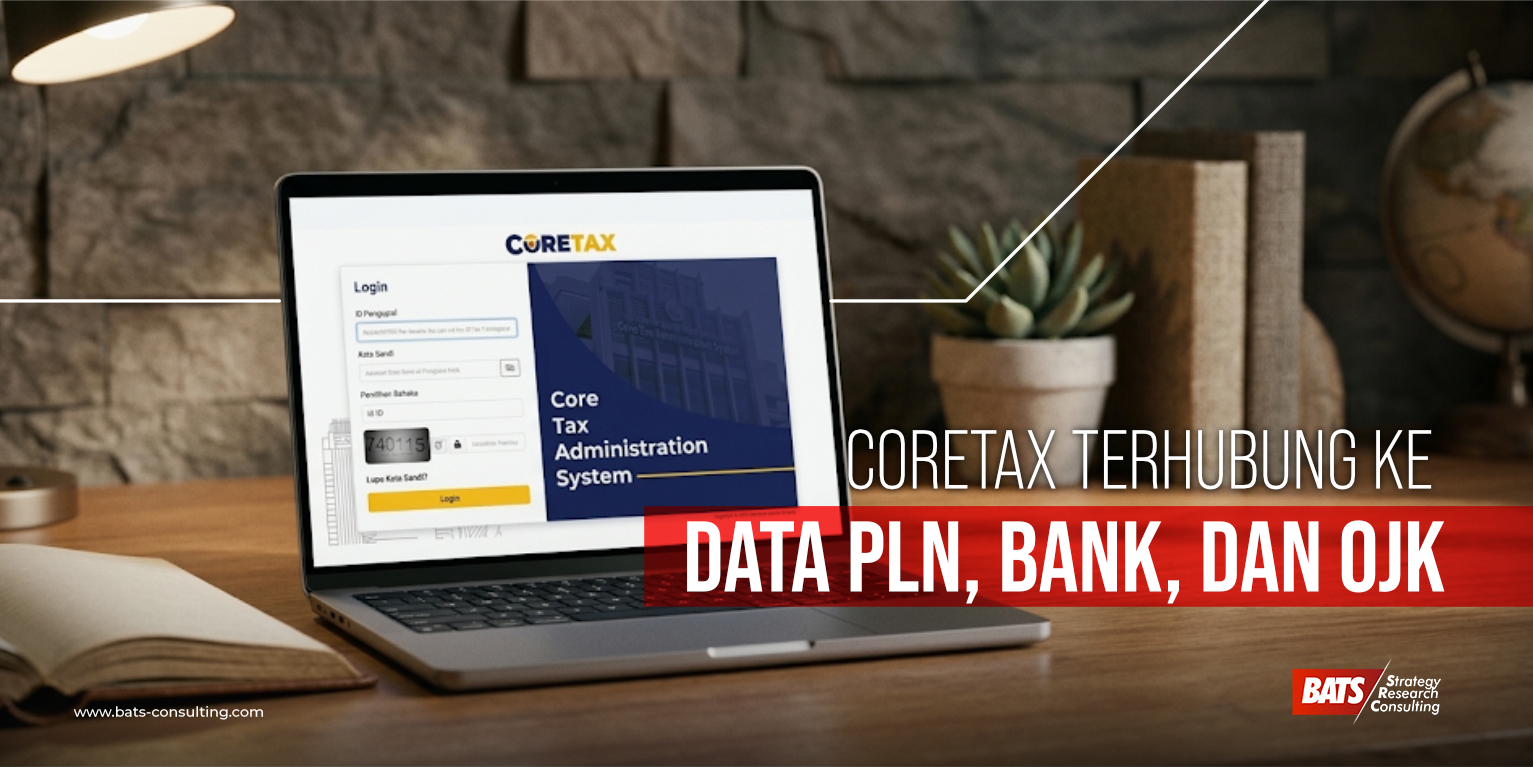
The Directorate General of Taxes (DGT) stated that the core tax administration system, known as Coretax, is now connected to data from various institutions and companies, ranging from PT PLN (Persero), banking sectors, to the Financial Services Authority (OJK). The statement was delivered by the Director General of Taxes, Bimo Wijayanto, in mid-June 2026 and immediately sparked widespread discussion. Many people ask: does this mean our electricity bills and bank statements can be viewed by tax officers? This article explains what is actually happening, the regulations behind it, and what taxpayers should do.
What the DGT Conveyed
On several occasions, including the Ministry of Finance Corpu Open Class seminar on June 22, 2026, Bimo explained that Coretax is connected to electricity consumption data from PLN, telecommunications services from Telkom, banking data from 55 domestic banks, as well as systems from OJK, OSS, Peruri, Directorate General of General Legal Administration (AHU), and Dukcapil. The connection with Dukcapil is used to synchronize the National Identification Number (NIK) directly with the Tax Identification Number (NPWP).
The objective is to test the reasonableness of tax reporting—measuring the alignment between an individual's economic capacity and their reported taxes. He provided a simple illustration: if a home's power capacity and electricity consumption are very large while the tax reported by the owner is only around Rp10 million per year, the system will flag the discrepancy for further investigation.
One thing must be emphasized. Consumption data is not the basis for calculating taxes. That data functions as an initial indicator (red flag) that triggers checks. The end of this process is usually a Request for Explanation of Data and/or Information (SP2DK)—a letter asking the taxpayer to clarify the discrepancy—not an automatic tax assessment.
The Underlying Regulations
The authority of the DGT to collect third-party data is not new and was not created by Coretax. Coretax merely centralizes and enables rapid processing of data that has long been authorized for collection. Here are the main regulations:
Article 35A of the KUP Law. This article obligates government agencies, institutions, associations, and other parties (abbreviated as ILAP) to submit tax-related data and information to the DGT. Its implementing regulation is Government Regulation Number 31 of 2012.
PMK 228/PMK.03/2017 as amended by PMK 8 of 2026. This is the regulation detailing who provides what data. PMK 8/2026 was enacted on February 27, 2026, and expanded the list of data providers to 52 ILAP groups covering 105 entities. Key points include:
Electricity Data. PLN is among the providers. The scope includes customers with capacities of 2,200 VA and above, covering customer identity, NIK, tariff category, and usage history.
OJK Data. OJK must submit data from the Financial Information Services System (SLIK)—including identity of individual and business entity debtors, credit facilities along with ceilings and collectibility, board and owner data, collateral data, and debtor financial statements. Submission is annual, at the latest by the end of April of the following year.
Credit Card Data. Credit card acquirers are required to submit merchant receipt data on credit card transactions, including issuing bank name, merchant identity, settlement year, total settlement transactions, and total canceled transactions. The first submission is due by March 2027 at the latest.
Additional Data Requests. Through Article 5B, the DGT may request additional data from ILAP via official letters. ILAP must respond within a maximum of one month from receiving the letter.
Access to Financial Information. For account data, the basis is Law Number 9 of 2017. Its technical guidelines are now regulated by PMK 108 of 2025, effective since January 1, 2026, replacing PMK 70/PMK.03/2017. Financial institutions report account information to OJK, which then forwards it to the DGT. For domestic purposes, the threshold that has been in effect is an aggregate balance of Rp1 billion for individual accounts. For international information exchange, Automatic Exchange of Information (AEOI-CRS) and crypto assets (AEOI-CARF) are scheduled to start in 2027 based on 2026 data.
SE-9/PJ/2026. Issued in July 2026, this circular letter updates procedures for requesting information, evidence, or explanation. The scope of activities serving as grounds for requests expanded from four to eight, including information exchange, compliance supervision, intelligence, audit, collection, to investigation. Parties that can be questioned were also expanded beyond the taxpayer concerned to include family members under one NPWP, management, taxpayer representatives, shareholders, and beneficial owners. Coretax was added as a channel for requests.
Where the Boundaries Lie
This data access is not without boundaries. Article 34 of the KUP Law and Government Regulation Number 50 of 2022 govern official secrecy: tax officials are prohibited from disclosing taxpayer data to outside parties, under threat of criminal sanctions. Law Number 27 of 2022 on Personal Data Protection also restricts the processing of personal data to legitimate and specific purposes.
Readers need to understand that this data provision is periodic and structured—for example, PLN and OJK submit certain datasets on specific schedules. This differs from the image of tax officers freely opening anyone's bank statements at any time. More specific data requests must still go through established procedures and grounds.
Practical Impact on Taxpayers
The practical consequence is simple: consistency is key. What is reported in the tax return (SPT) should align with the economic trail recorded elsewhere. A few items worth checking yourself:
Completeness of Income. Side income, honorariums, property rentals, or digital activity income are often missed, even though they leave transaction trails.
List of Assets and Liabilities. The asset column in the annual SPT is often filled casually. Yet properties, vehicles, account balances, and credits recorded in SLIK can be cross-checked against those entries.
Document Readiness. Discrepancies between third-party data and the SPT do not always mean unpaid taxes. Inheritances, gifts, loans, asset sales, or income subject to final tax are valid explanations—provided they can be proven with documents.
Responding to SP2DK. If you receive an SP2DK, do not ignore it. The letter is an opportunity to clarify matters before the issue escalates to an audit.
Conclusion
Coretax does not grant the DGT new authority to snoop on public data; that authority has existed since Article 35A of the KUP Law and was detailed through PP 31/2012 and PMK 228/2017, now amended by PMK 8/2026. What has changed is technical capability: data from PLN, banking, OJK, and dozens of other institutions now enters a unified system and can be cross-examined quickly. For taxpayers who report income and assets accurately, this change presents no additional risk. For those whose reporting has been incomplete, the room to ignore it is narrowing. The most logical step is to review tax returns from recent years, complete asset and income data, and prepare supporting documents starting now.
Frequently Asked Questions
1. Can tax officers now view my account balance and statements anytime? Not that freely. Financial institutions report account information periodically through OJK based on Law 9/2017 and PMK 108/2025, with specific thresholds—for domestic individual accounts, the aggregate balance threshold has been Rp1 billion. Requests for more detailed information outside periodic reporting must follow official procedures and are restricted to regulated activities, such as compliance supervision, audits, or collections.
2. Does my electricity bill automatically determine my tax amount? No. Electricity consumption data is only used as a reasonableness indicator, not as a basis for tax calculation. That data is compared with your tax report. If a striking discrepancy exists, the DGT will request an explanation, usually through an SP2DK. Taxes are still calculated from income according to applicable laws.
3. I am an electricity customer below 2,200 VA. Is my data reported too? Based on the annex of PMK 8/2026, the obligation to report electricity customer data applies to customers with capacities of 2,200 VA and above. Nevertheless, electricity data is just one of dozens of data sources collected by the DGT, meaning taxpayers outside that criteria are not beyond supervision.
4. What should I do if I receive an SP2DK? Read the letter carefully to understand what data is questioned and which tax year is involved. Prepare supporting documents such as bank statements, withholding tax slips, deeds, or agreements explaining the source of funds or assets. Respond within the requested deadline. If the value or complexity is high, consider seeking guidance from a tax consultant. Ignoring an SP2DK increases the likelihood of progressing to a formal tax audit.
5. What about MSME actors whose turnover is still below the taxable threshold? Tax rates and gross turnover thresholds remain unchanged by this data integration. What changes is the ease with which the DGT can verify whether reported turnover reflects actual business activity, for instance through credit card merchant transaction data or licensing data. Therefore, neat and consistent turnover record-keeping remains essential, including for businesses not yet subject to tax.
This article is also available in English. Switch to English