Limbah Panas Pusat Data Kini Dipakai untuk Menghangatkan Rumah
Di sejumlah negara Eropa, kini panas itu dialirkan ke jaringan pemanas kota dan dipakai untuk menghangatkan rumah, sekolah, dan perkantoran.
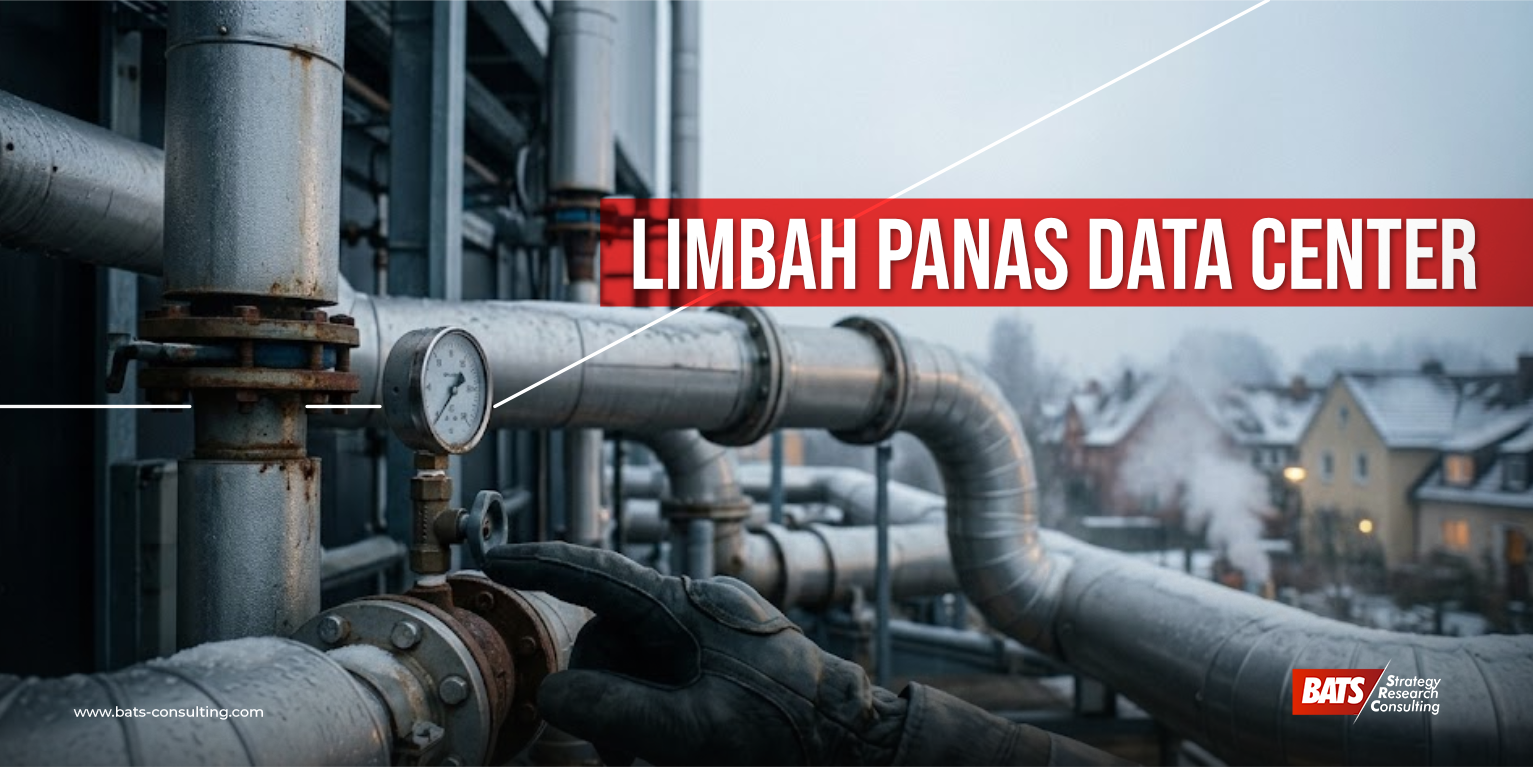
Data centers are buildings containing thousands of servers that store and process digital data. Almost all the electricity they use turns into heat, and that heat must be removed so the servers do not get damaged. For years, this heat was simply released into the air or water. In several European countries, this heat is now channeled into city heating networks and used to warm homes, schools, and offices. This practice is increasingly being driven by legal regulations, especially in the European Union and Germany.
How Server Heat Reaches Homes Cooling water from servers generally exits at a temperature of around 35 to 50 degrees Celsius. That temperature is too low to heat buildings directly. Therefore, the heat is first increased using a heat pump, a device that moves and concentrates heat, up to approximately 80 degrees or more. The heat is then channeled through underground hot water pipes to customers. This pipe system is called district heating.
Two conditions make this method viable. First, the data center must be close to the pipeline network. Second, the area must require heating for most of the year, such as in cold-climate countries. Without both, the heat is difficult to sell.
Examples Already Running
Finland. Microsoft and energy company Fortum are building a data center in the Espoo, Kauniainen, and Kirkkonummi regions. Once fully operational, the heat from this data center is expected to supply about 40% of the heating needs for around 250,000 users. Both parties estimate that carbon dioxide emissions will be reduced by about 400,000 tons per year because this heat replaces coal and gas. According to DatacenterDynamics, the supply from the data center will increase as the construction phases are completed. In the meantime, Fortum's heat pump plant is using ambient air and electric boilers.
Ireland. According to CNBC, an Amazon Web Services data center in Dublin meets 92% of the heating needs of a technology campus.
France and Canada. CNBC reports an Equinix data center in Paris warms about 1,000 homes. In Markham, Ontario, an Equinix data center modified to distribute heat serves apartments, schools, and a university campus.
Denmark. Meta's data center in Odense channels heat into the city's network. The number of homes served varies across sources, ranging from about 6,900 to 11,000.
UK Projection. An analysis by EnergiRaven and Viegand Maagøe suggests that heat from new data centers could warm at least 3.5 million homes in the UK by 2035. The condition is that heating pipeline networks are built alongside the growth of data centers. This is a projection, not an achieved result.
The obstacles are also real. According to DatacenterDynamics, heat from data centers is often offered for free without supply guarantees, making the connection frequently financially unviable for network operators.
Regulations Driving It European Union. The Energy Efficiency Directive (2023/1791) has been in effect since October 10, 2023. According to the Swedish energy authority, there are two main obligations. First, data centers with a minimum IT equipment power demand of 500 kilowatts must report their energy performance annually to the EU database. The report includes energy, water, and waste heat consumption. Second, data centers with a power demand above 1 megawatt must utilize their waste heat, unless it can be proven technically or economically unfeasible.
Germany. The Energy Efficiency Act (EnEfG) has been in effect since November 18, 2023. Article 11 paragraph (2) mandates that new data centers must reuse waste energy with a phased minimum threshold:
Starting operation from July 1, 2026: Minimum 10%
Starting operation from July 1, 2027: Minimum 15% (planned figure)
Starting operation from July 1, 2028: Minimum 20% (planned figure)
The same law sets electricity efficiency limits for older data centers and obligations to use renewable electricity. According to DatacenterDynamics, this heat utilization obligation has exemptions, and data center operators previously complained about planning uncertainty because there may not necessarily be heat buyers near the location.
Indonesia. Based on the reviewed sources, there are no national regulations mandating data centers to utilize waste heat. Eco-Business notes that businesses are not yet required to measure or report data center energy efficiency. The IESR institute, as published by Katadata, encourages the government to issue specific regulations, including an energy efficiency limit (PUE) below 1.3.
Directly, there have been no changes. Indonesia has a tropical climate and does not have district heating networks for homes. Even so, this topic is relevant for two reasons. Data centers in Indonesia continue to grow, and their waste heat could potentially be used in places that need hot water, such as hotels or hospitals. Additionally, corporate customers or businesses renting data center services in Europe will increasingly see energy and waste heat reporting in their providers' sustainability reports.
Frequently Asked Questions (FAQ)
Why do data centers produce so much heat? Almost all the electricity used by servers turns into heat. That heat must be removed so the equipment doesn't get damaged, meaning data centers always require cooling systems.
Can heat from data centers be used directly to heat homes? No. The temperature is generally only 35 to 50 degrees Celsius. The heat needs to be increased first with a heat pump, then channeled through hot water pipes to customers.
Are data centers in Europe required to share their heat? Partially. In the EU, data centers above 1 megawatt must use their waste heat unless technically or economically unfeasible. In Germany, new data centers operating from July 1, 2026, must reuse at least 10% of their energy, gradually increasing to 20% for those operating from July 1, 2028. There are exemptions in the rules.
Can this method be implemented in Indonesia already? There are no regulations mandating it in the reviewed sources, and homes in Indonesia do not use district heating. Utilization for building hot water needs might be studied, but there is no proof of its viability in Indonesia yet.
Is this method automatically environmentally friendly? Not automatically. The impact depends on the data center's electricity source and the type of heating being replaced. In Finland, data center heat replaces coal and gas, and the data center uses emission-free electricity. Data centers using fossil fuel electricity will provide smaller benefits.
This article is also available in English. Switch to English